Global Wellbeing Products Brand
Expanding product possibilities with generative design
A global brand for personal wellbeing products had built its success on hand-crafted product design.
With a crowded market and rising pressure to deliver more concepts, the brand wanted to know what generative design could do for its product development.
INDEED ran a three-month exploration, building design scripts that generate print-ready product models from rules and data.
The brand gained a faster way to explore form, a pipeline that adapts when requirements change, and a foundation for AI-driven product development.
The Challenge
Breaking out of a crowded category
The brand’s designers developed every product by hand, from sketch to CAD. Each concept took around 35 hours, and every adjustment to ergonomics, aesthetic appearance or internal components meant an intensive round of remodelling.
An analysis of more than 130 products showed the same few shapes repeated across the market.
The brand needed more options, faster, without compromising on design, ergonomics, internal electronics or manufacturability, across multiple product categories.
Our Approach
Set the rules once, generate the variants
INDEED ran the project as three sprints, one per opportunity stream in the brief.
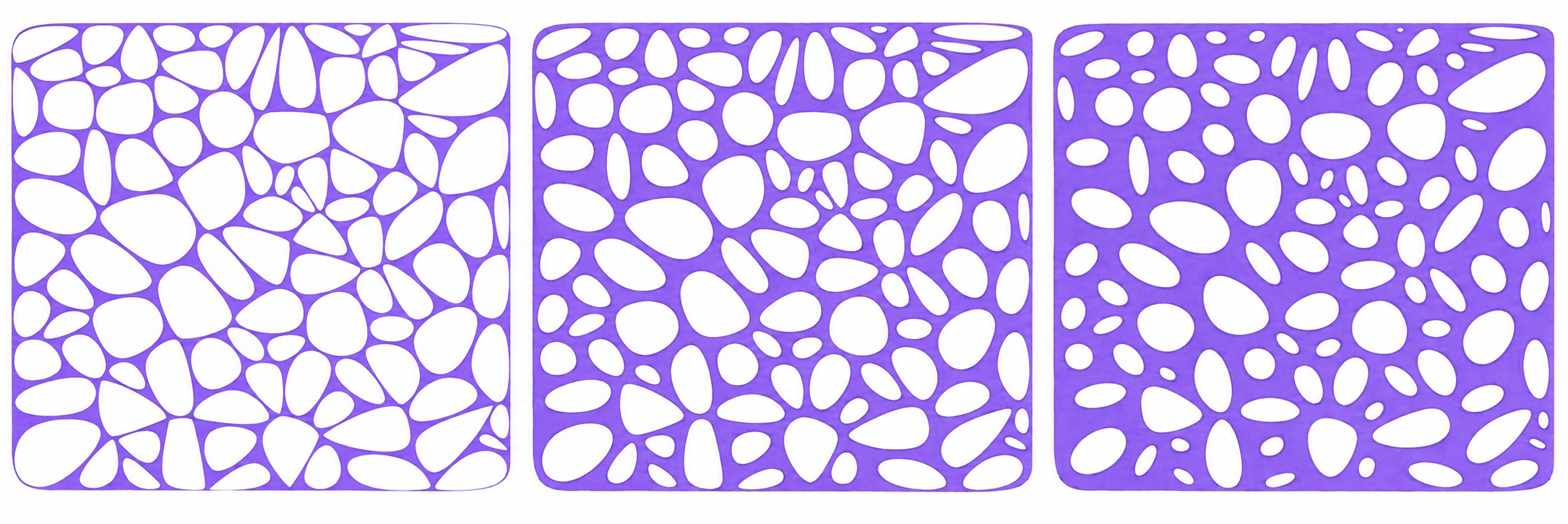
The first sprint focused on new design languages. Five parametric design scripts apply new structures and textures to almost any product surface, including existing CAD designs. They produced 56 structures and textures, all ready for 3D printing.
The second sprint built a semi-automated ideation process. A market analysis defined the product archetypes, and three scripts now generate complete product families. Height, diameter, twist, roundness and grooves change in a few clicks.
A real-time check flagged when a shape cut into the space required for internal electronics, helping designers identify clashes as they explored.
“Generative design changes what is possible. Instead of drawing one shape at a time, we set the rules and let the system explore. That gave us forms no conventional process could reach.”
Alex Dumler, Design Project Lead at INDEED Innovation
The third sprint explored data-driven design. A link between an advanced data table and the parametric design model lets any dataset drive the form: change the numbers, and the shape changes with them.
This opened up possibilities for customisation. Anatomical data could help tailor shape and size to different bodies. User data, from reviews to test feedback, could inform new variants and, with further development, support online product configuration. Market data could guide which forms and textures to explore next.
Outcome
A design pipeline that adapts when requirements change
The brand left the project with a working generative design pipeline that delivers more concepts per brief.
- 45 shapes generated in 29 hours during the exploration. The previous process took 175 hours to develop five concepts.
- 162 models across three product families, each checked for clearance around internal components.
- Efficient use of material, with generated structures that reduce material wherever it is not needed
The project showed that design rules, not individual drawings, can carry the complexity of a product category. Designers set the rules and judge the results; scripts handle the variation.
The pipeline allowed the team to adjust forms when requirements changed, reducing the need to remodel each variant individually. By connecting data to form, it also laid a foundation for the client’s future AI-driven product development.
Industrial design, computational design, market analysis and data integration, delivered in one three-month engagement.

