AI in product design: deciding what to automate
Intelligent products and automated design tools raise a shared question: which decisions should the system handle, and which need human judgement? Our work with a global wellbeing products brand shows how defining that boundary can open up more possibilities for product development.
Fewer steps. Better decisions?
Reducing effort has a clear appeal. Let a product adjust its settings. Let a design tool generate the next variation. Give people more time for the work that matters.
But a step removed is not automatically an improvement. It might be repetitive work. It might also be the moment someone checks a result, questions an assumption or chooses a different direction.
The challenge is deciding what can be delegated, what needs to remain visible and where people need control. That applies both to how we develop products and to how intelligent products behave in use.
More possibilities, within defined limits
A global brand for personal wellbeing products came to INDEED with a familiar challenge: it needed more concepts, faster, in a crowded category.
Its designers developed each product by hand, from sketch to CAD. A concept took around 35 hours. Changes to ergonomics, appearance or internal components meant another intensive round of remodelling.
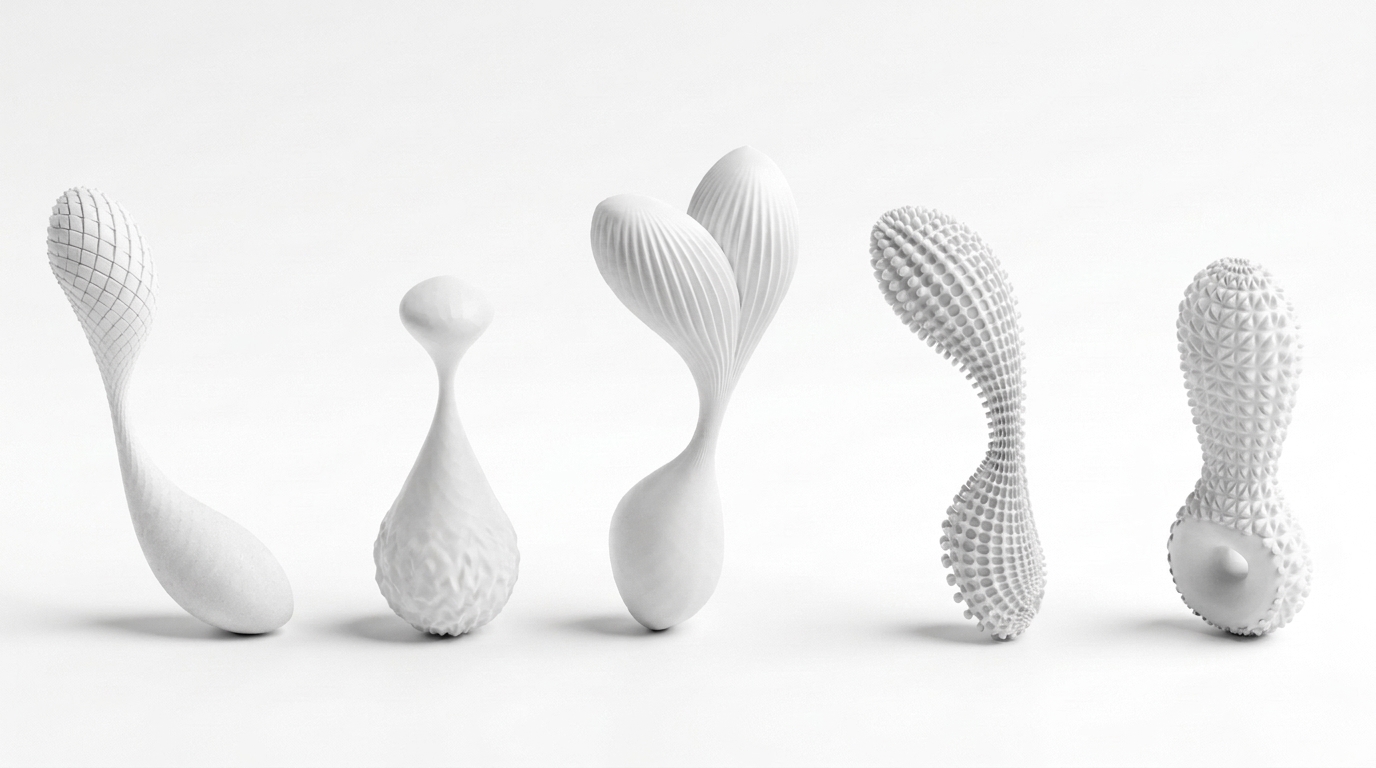
Across a three-month exploration, we developed parametric design scripts that generate product forms, structures and textures from rules and data.
Designers could adjust height, diameter, twist, roundness and grooves in a few clicks. A real-time check flagged when a generated shape entered the space required for internal electronics, making clashes visible during exploration.
The scripts handled variation. Designers defined the rules and judged the results. Generating a model did not settle whether its form was desirable, its ergonomics appropriate or its manufacturing approach viable.
During the exploration, the team generated 45 shapes in 29 hours, compared with five concepts in 175 hours in the previous process. Across three product families, 162 models were generated and checked for clearance around internal components.
These figures describe the concept exploration. They show how much more the team could explore; they do not establish that every generated option was ready for production.
Define what the system can do, and what its checks can tell you
This project used rule-based generative design. It also connected data to form, laying a foundation for future AI-driven development.
That distinction matters. A script can produce a shape within defined parameters. A clearance check can flag a clash with internal components. Neither can answer every question about the product.
The development team still needs to decide what to pursue, what to test and whether the rules themselves need changing.
Clear boundaries make automation useful. People can understand what has been checked, what remains uncertain and where their judgement is required.
The same question follows the product into use
For Physical AI, that division of responsibility becomes part of the product experience.
A connected appliance might adjust a routine setting automatically. People may still need to understand a change that affects the result and have a clear way to choose something else.
An intelligent machine might prepare its next action. If conditions fall outside what it can reliably interpret, the design needs to define when it pauses, what it communicates and how someone intervenes.
The consequences differ from those of a design tool, but the questions are related:
- What can the system handle reliably?
- What information does a person need to judge its output or action?
- When should it ask, pause or hand control back?
- How can someone change or recover from the result?
These decisions shape sensing, hardware, feedback and system behaviour together.
Bring the consequences forward
Our wellbeing project made one important constraint, the space for internal electronics, visible while designers explored form. That helped the team identify clashes while the variants were still easy to change.
For an intelligent product, behaviour prototypes can serve a similar purpose. Test an unexpected action, an interruption or an uncertain sensor reading early enough for the findings to shape the concept.
Our Upfront Intelligence approach brings design, engineering, manufacturing and circular systems thinking together from day one. It puts more of the decisions that will matter into the room while teams can still act on them.
Automation creates value when teams know what to delegate and what still needs judgement. Define that early, and both the development process and the product can help people make better decisions.
Explore the case: Expanding product possibilities with generative design
Where could generative design or AI add value to your products? Let’s explore the opportunity.

Alex Dumler
Industrial Design
Product Development
Ecodesign


