Covestro’s portfolio of bio-based, recycled and high-performance materials was growing, but customers often experienced these materials through technical documentation and data sheets.
We helped turn that information into something more tangible: a modular material configurator, a 3D-printed lamp made from post-consumer recycled polycarbonate, and a visual map showing where different circular materials come from and how they move through their lifecycle.
Together, the three touchpoints gave customers new ways to see, handle, explore and understand circular materials, while applying circular design principles to the experience itself.
The Challenge
Circular materials were advancing faster than the experience around them.
Covestro’s library of bio-based, recycled and high-performance materials keeps expanding. But selecting a material is rarely just about its technical specification.
Customers also want to know: Where does it come from? What does recycled or mass-balanced mean in practice? And what can it become in a real product?
Covestro had established circular economy ambitions at group level. The opportunity was to bring those principles into the everyday experience of material selection and product design, making circularity visible, understandable and tangible.
A material becomes more convincing when customers can see it, handle it and understand what it can become.
Our Approach
Rather than treating circularity as a message layered onto the experience, we embedded it into the way the experience was designed.
01. Make material selection tangible
The design phase determines a large part of a product’s environmental impact: from the choice of materials to repairability, from a long and useful product life to recyclability.
Christopher Stillings, Head of Color and Design at Covestro’s Engineering Plastics Business Unit
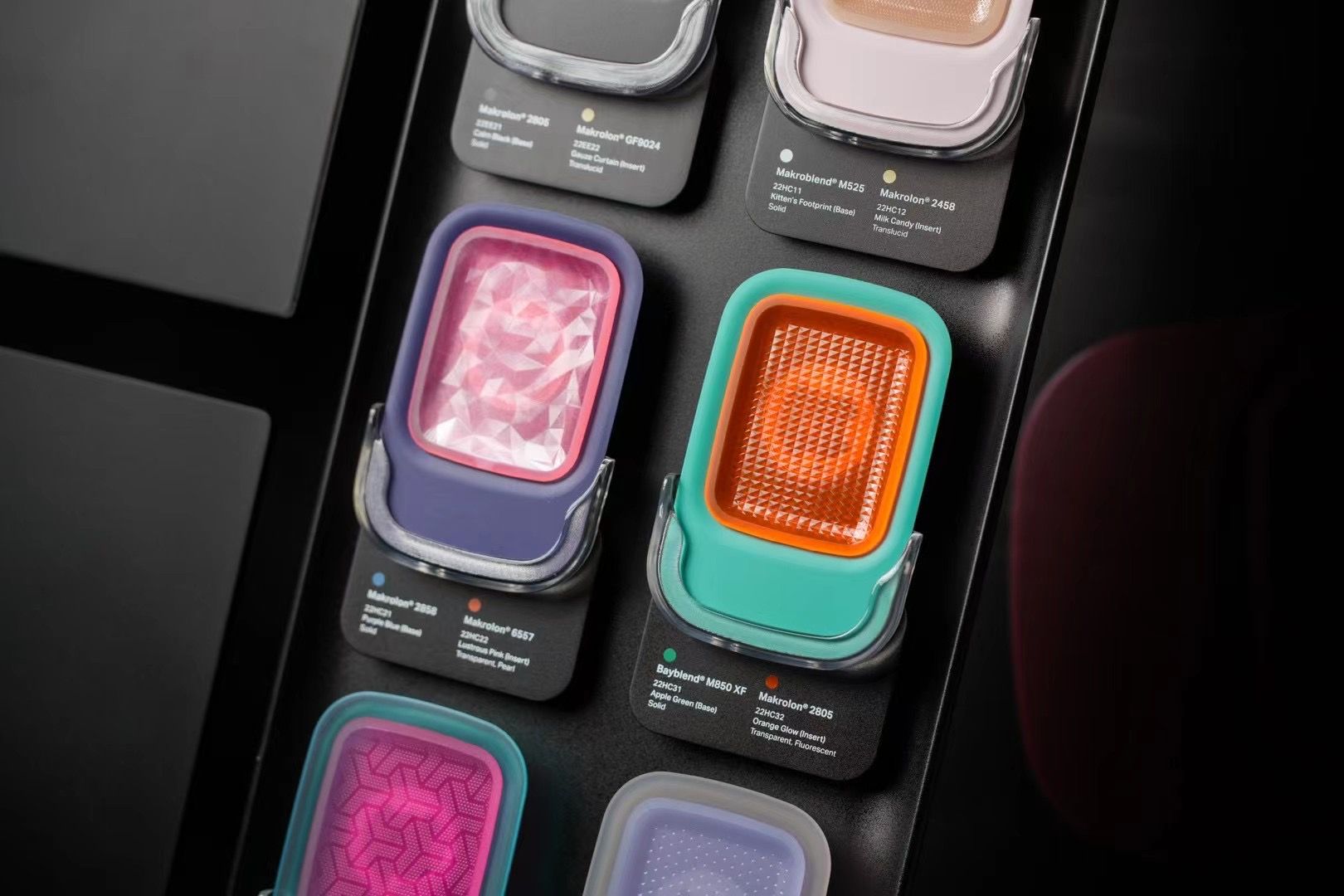
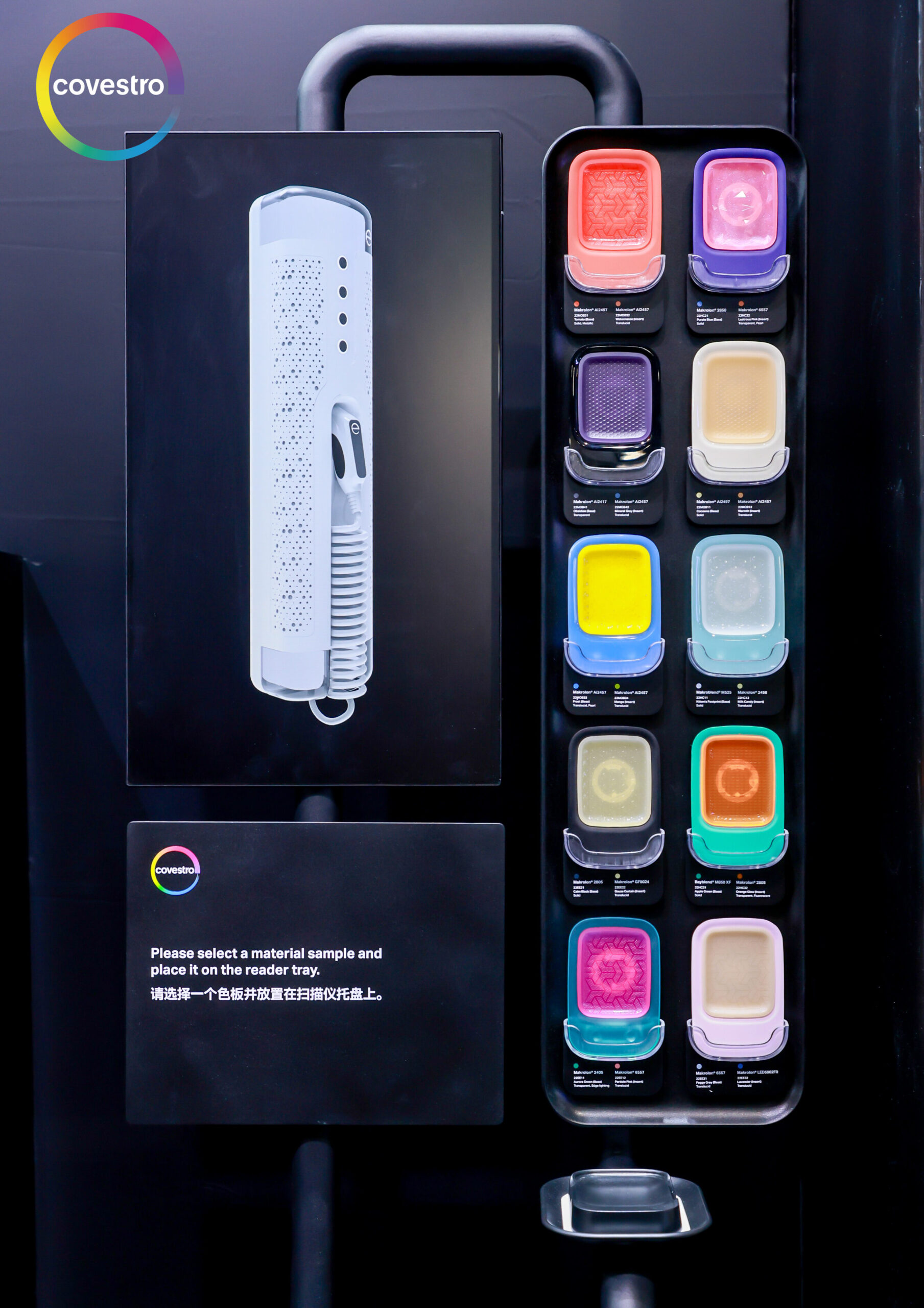
We extended Covestro’s Imagio® Configurator into a physical-digital experience, combining physical CMF samples with digital product renderings. Customers could explore materials physically, then see how they might perform and look in different product applications.
02. Apply circularity to the experience itself
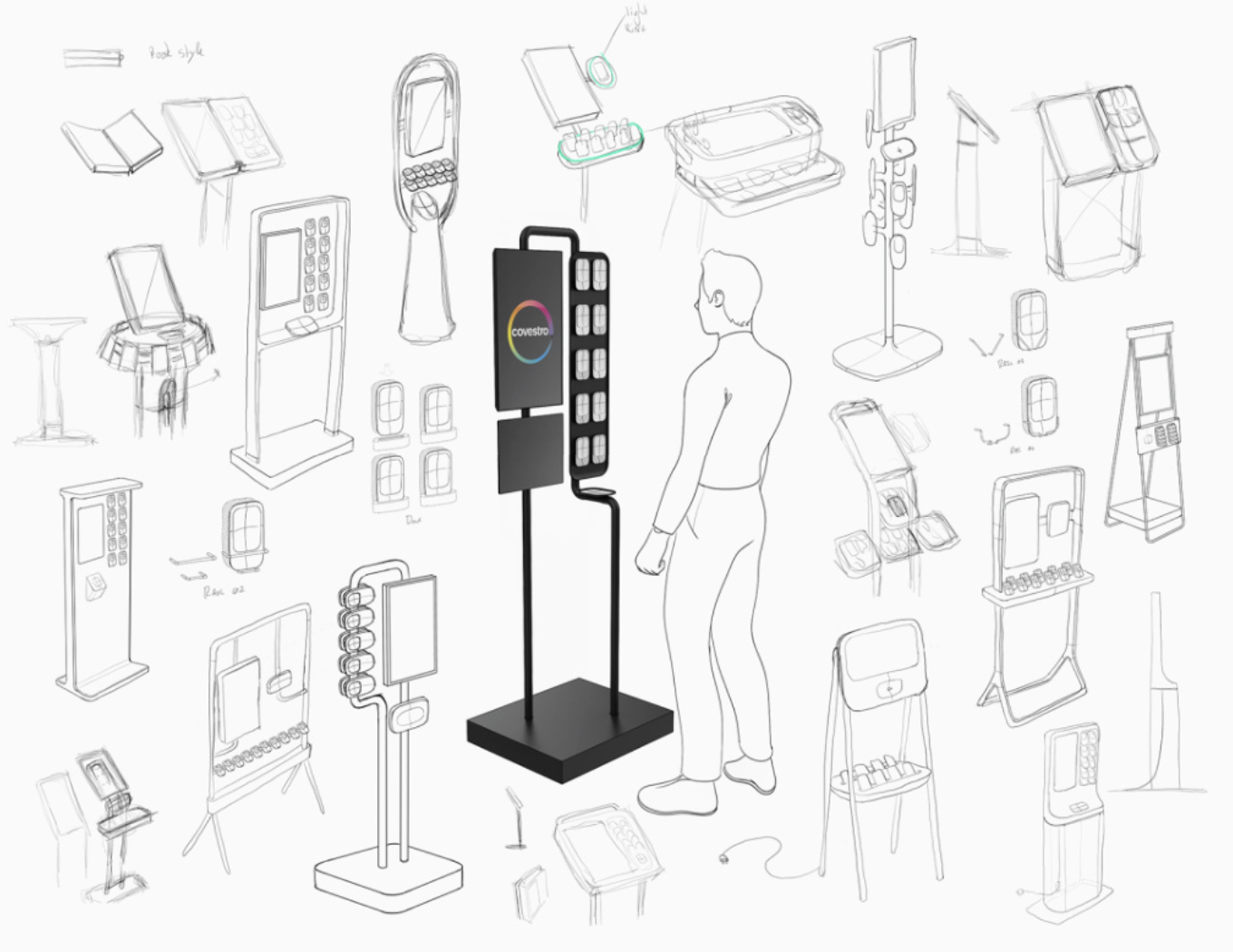
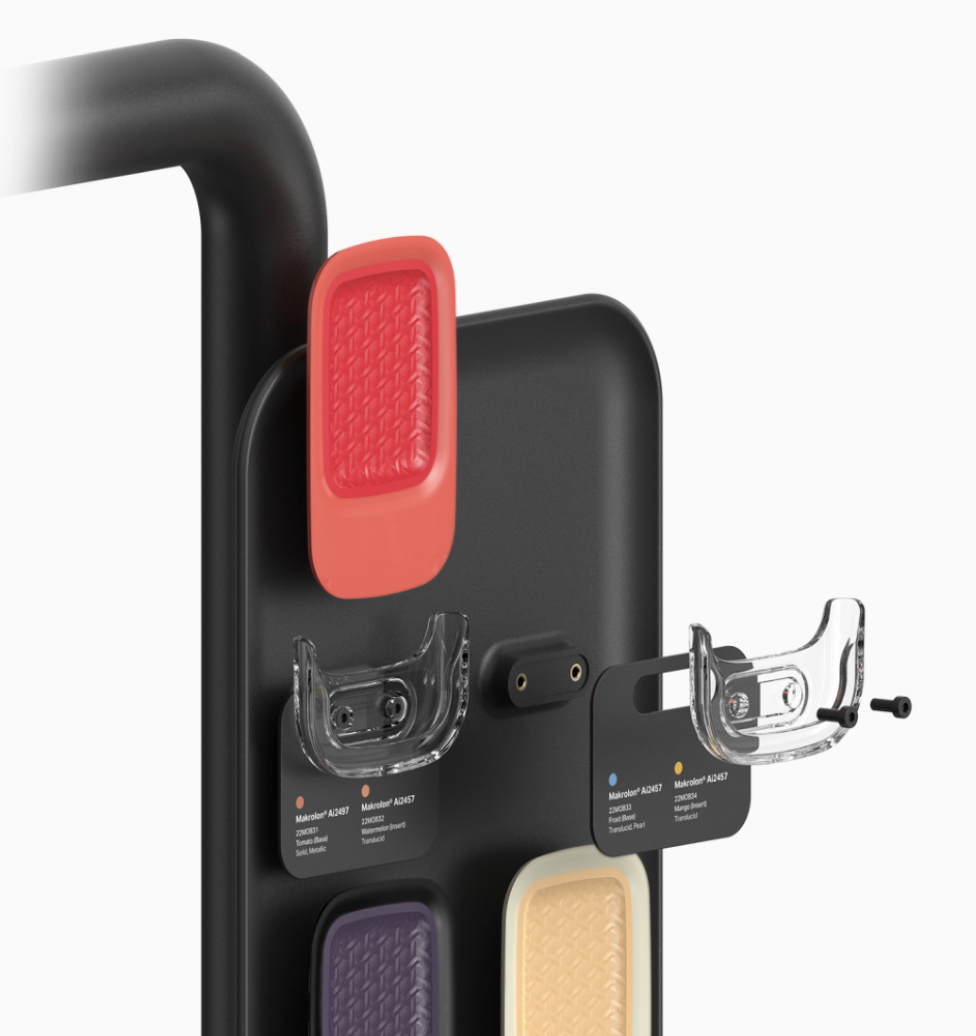
The configurator was designed as a modular system that could evolve alongside Covestro’s growing material library. Parts can be exchanged, repaired, assembled and disassembled using fasteners rather than adhesive, extending the life of the experience and making it easier to transport and reconfigure.
03. Show what recycled material can become
A 3D-printed table lamp demonstrated the aesthetic and functional potential of post-consumer recycled polycarbonate. Rather than hiding the material’s distinctive characteristics, we made them part of the design.
04. Make complex material journeys visible
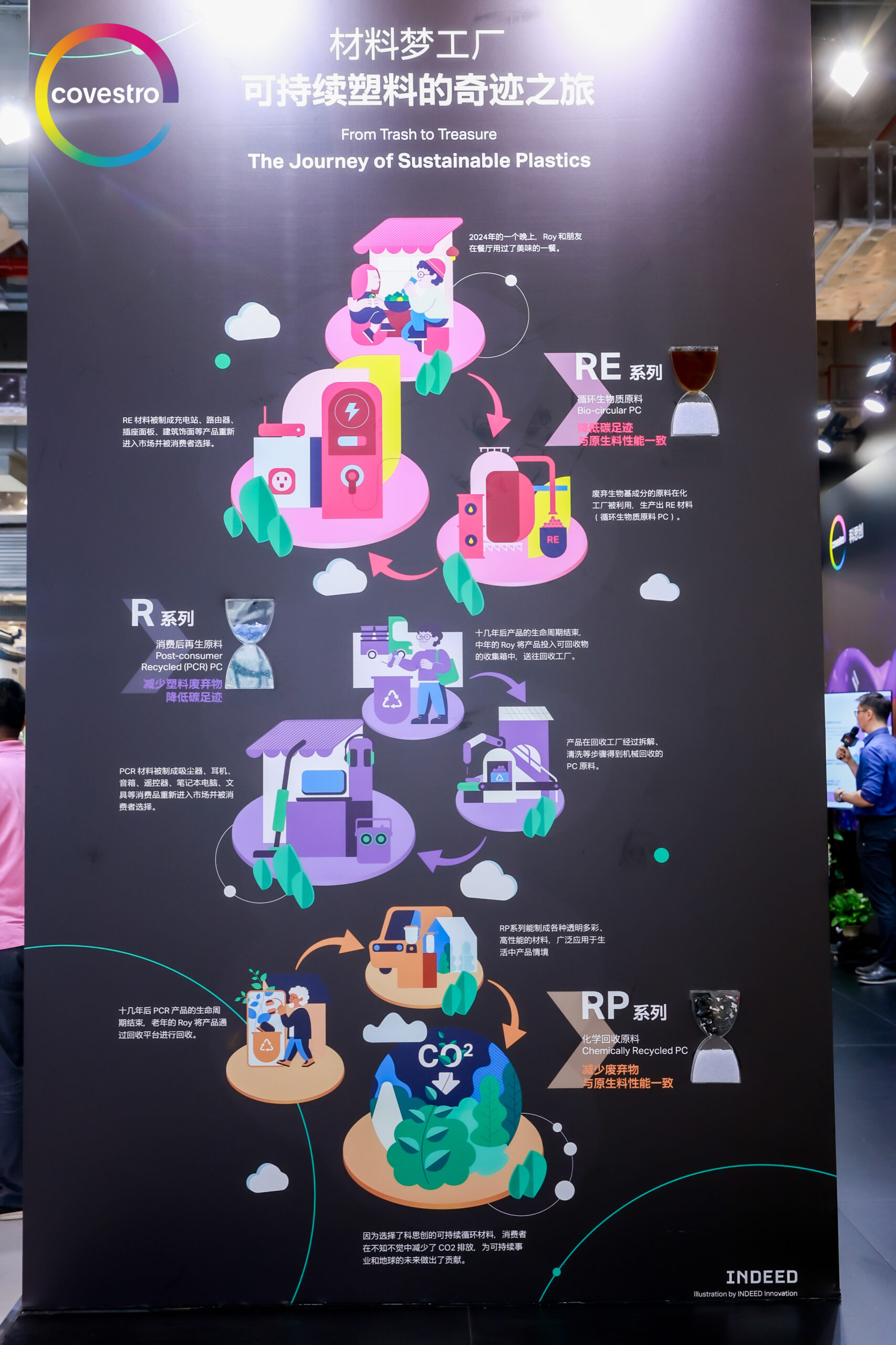
A visual system map translated bio-based, mechanically recycled and chemically recycled material pathways into an accessible visual language, helping customers understand material origins, processes and concepts such as mass balance.
Making Material Selection Tangible
We created a physical extension of Covestro’s Imagio® Configurator, combining an integrated rack of CMF samples with digital renderings of materials applied to industry-specific products.
This bridged the gap between material and application. Instead of evaluating a grade only through specifications, customers could physically experience the material and immediately explore how it could translate into a finished product.
“We incorporate reuse, repairable, lightweight, and other circular design strategies into the Configurator design.”
Alex Dumler, Senior Expert
The sample rack itself was designed as a modular system. As Covestro’s material library develops, individual samples can be exchanged without replacing the entire display.
The construction follows the same logic. Parts are assembled and disassembled with fasteners rather than adhesive, supporting repair, reconfiguration and easier transport between exhibitions.
Showing what Recycled Material can Become
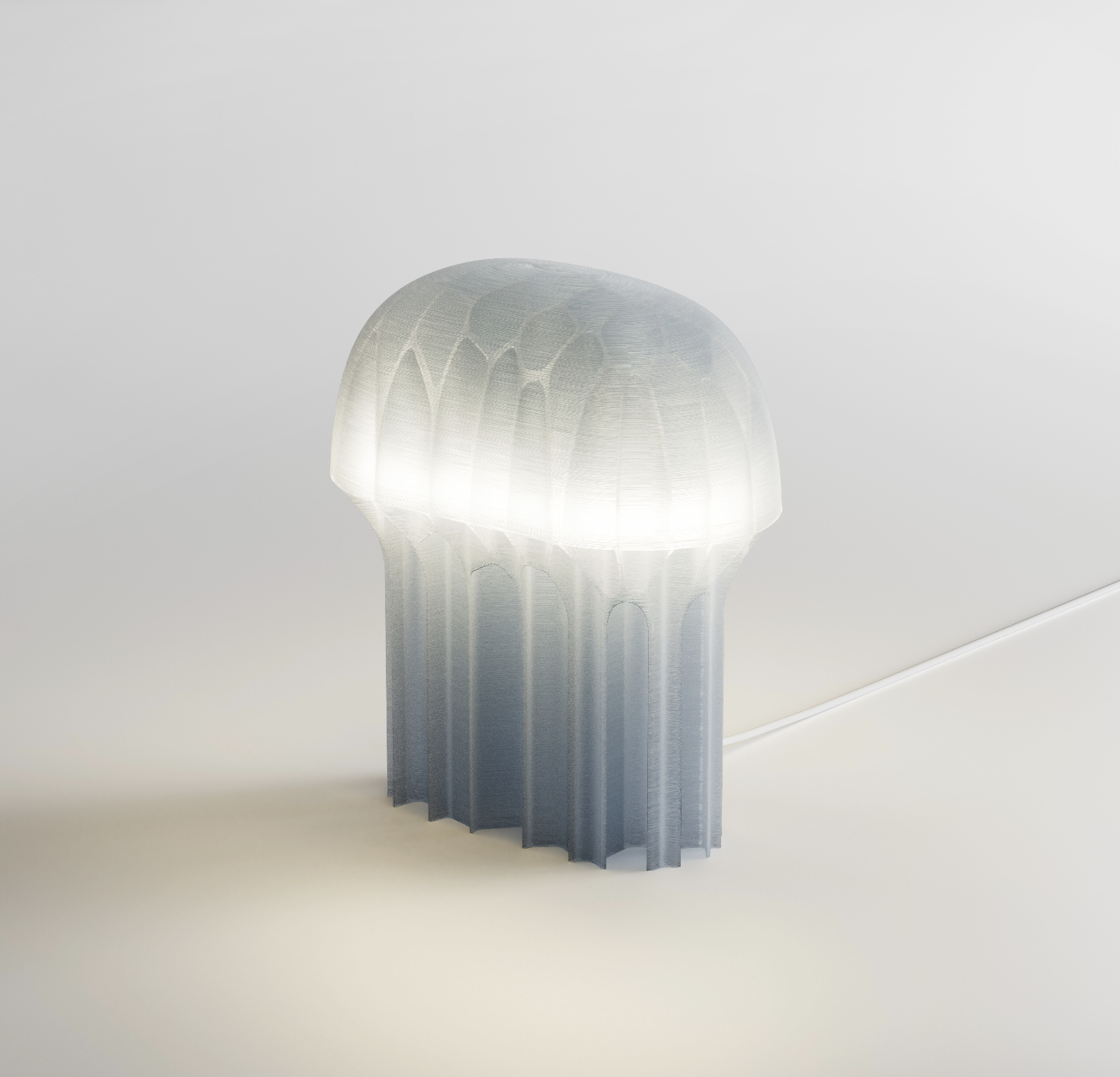
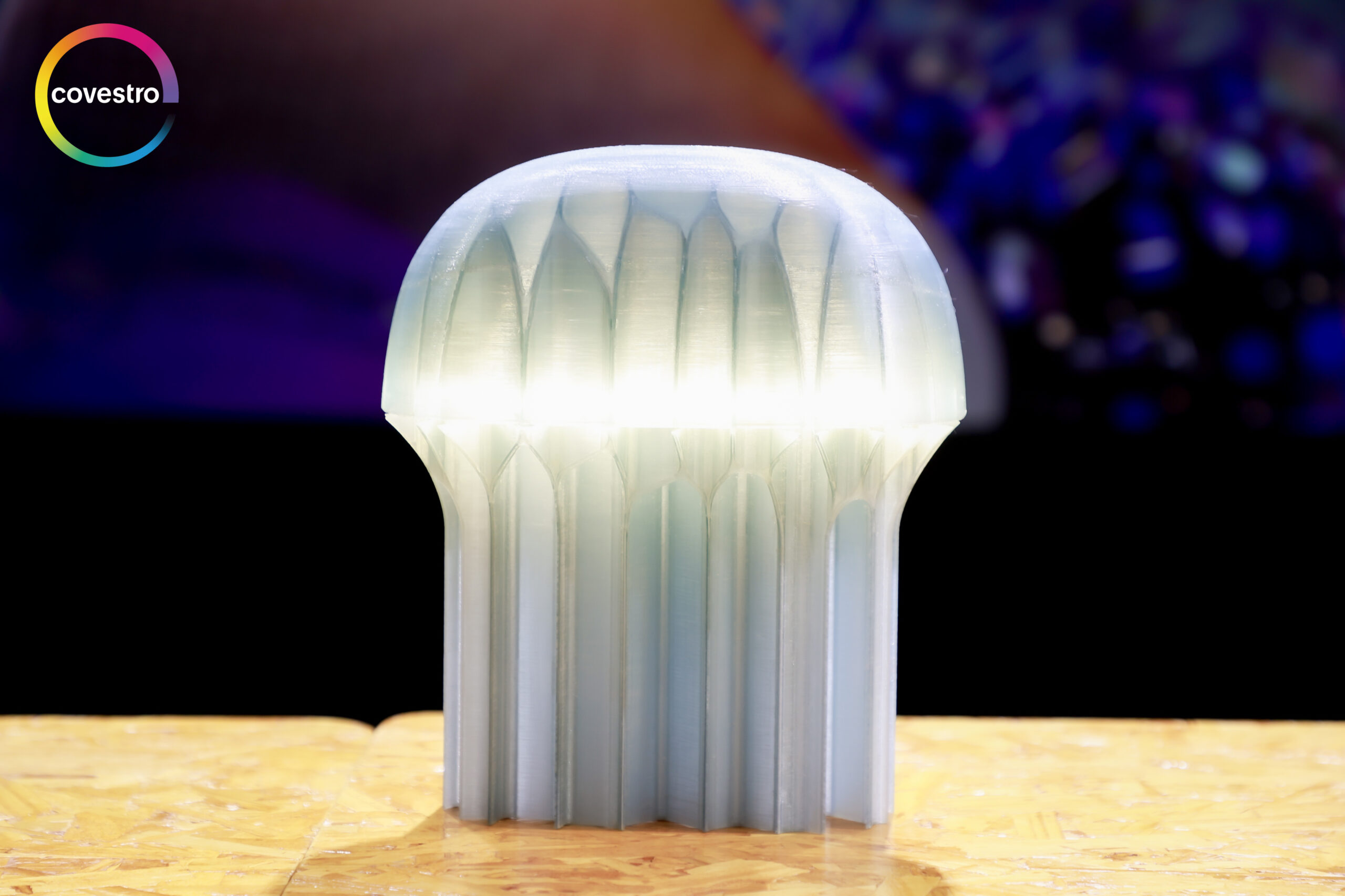
To move the conversation from “What is this material?” to “What could we make with it?”, we developed a table lamp together with Covestro and Polymaker.
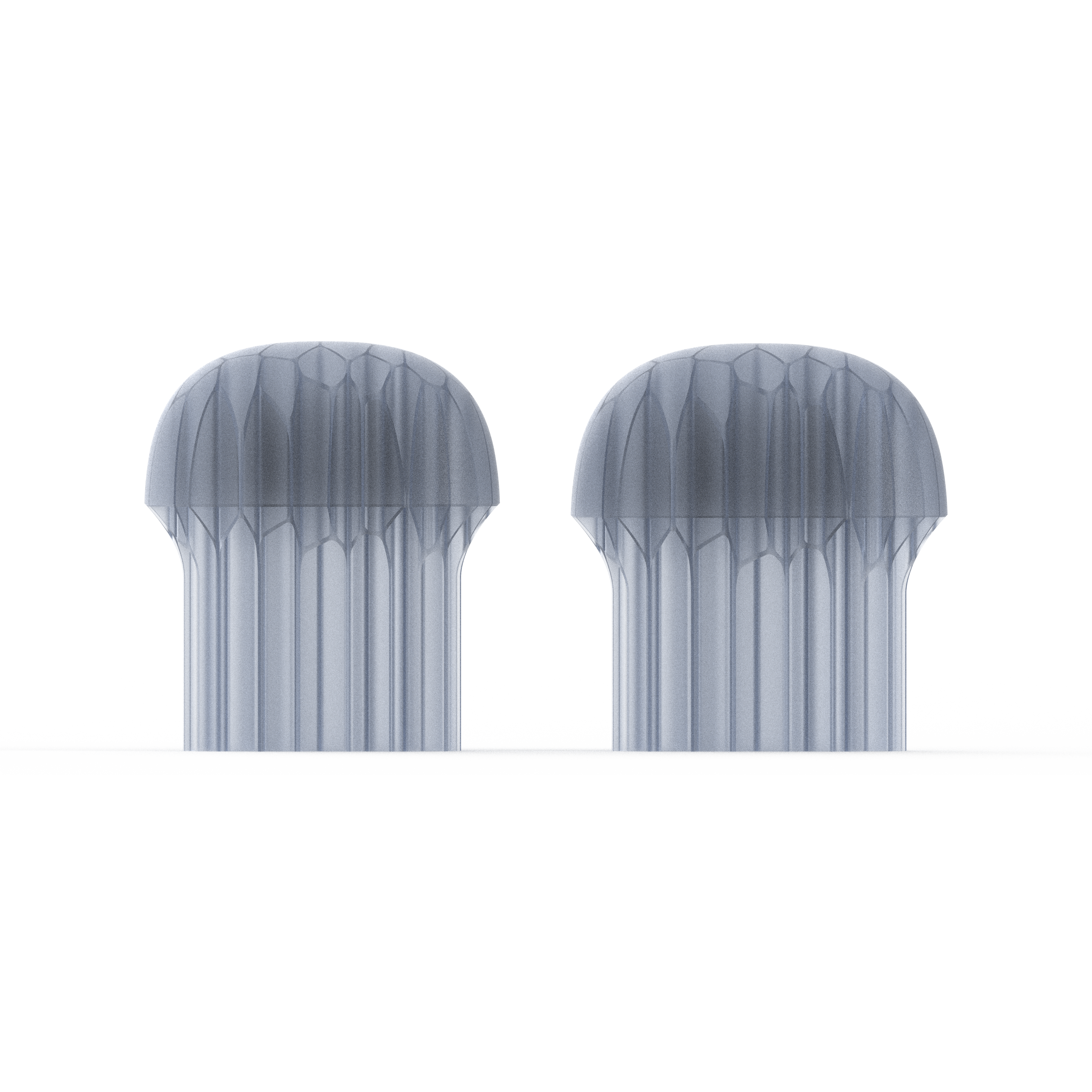
The lamp uses post-consumer recycled polycarbonate derived from recycled 5-gallon water bottles and produced as a 3D-printing filament. The recycled material has a distinctive blue-tinted translucency. Rather than treating this as a limitation, we made it central to the design.
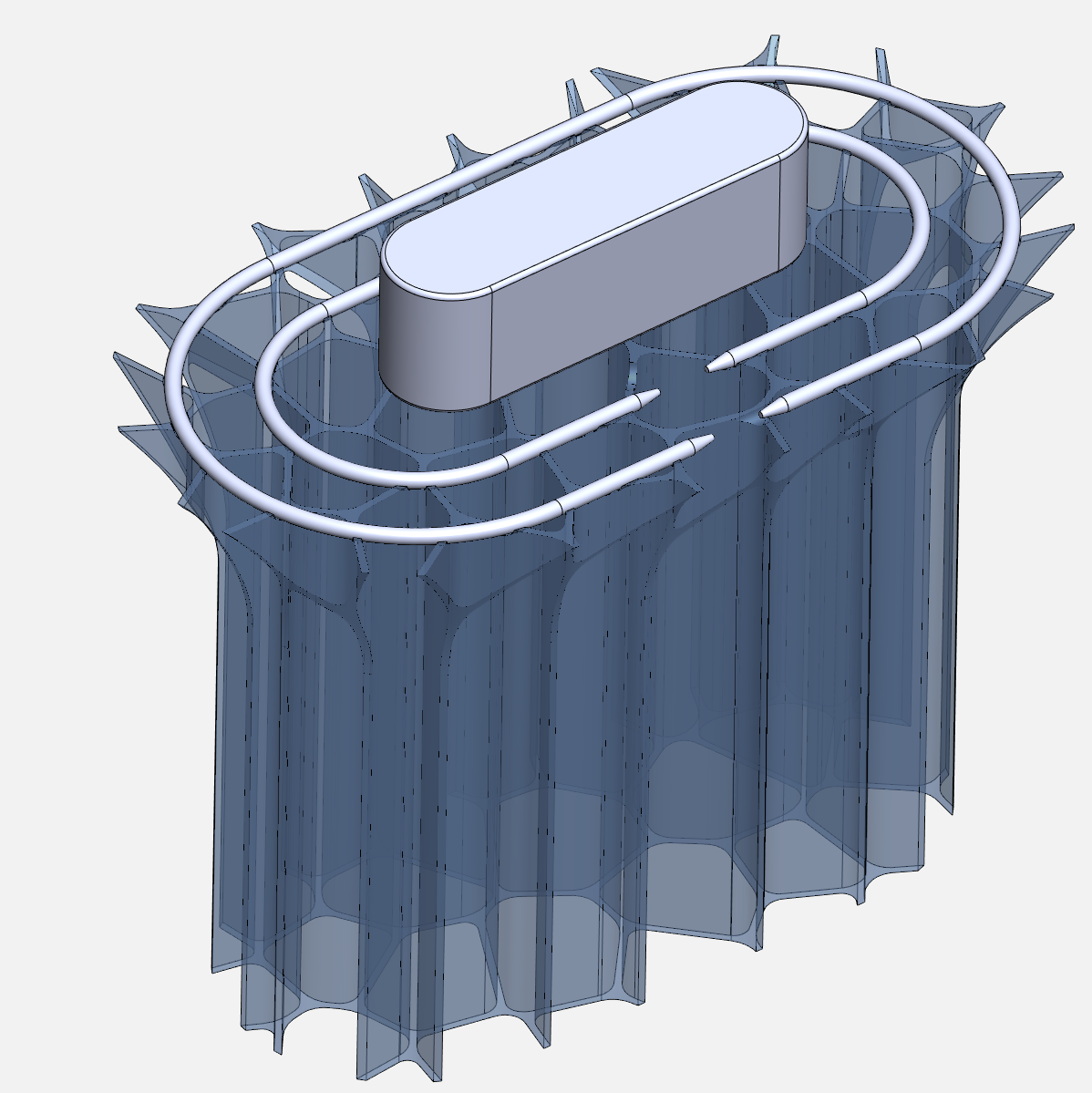
A Voronoi structure creates visual depth as light passes through the recycled polycarbonate, while a softer, rounded outer shell gives the technically expressive geometry a warmer domestic character.
The result demonstrates how the characteristics of a recycled material can become part of a product’s identity, rather than something to conceal.
The lamp was designed for disassembly and uses a mono-material approach where possible, supporting repair and end-of-life separation. Together with Polymaker, we also refined the geometry to reduce printing time and the energy required during production.
Making Material Origins Visible
Circular materials can involve complex processes that are difficult to communicate through conventional product specifications.
Together with Covestro, we developed a visual system map showing the journeys of bio-based, mechanically recycled and chemically recycled materials.
The map makes material origins and transformation processes easier to navigate, while introducing concepts such as mass balance and bio-circular feedstock in a visual, accessible format.
Instead of presenting circularity as an abstract sustainability claim, the system map gives customers a way to understand where materials come from, how they are transformed and where they can go next.
What Changed
Covestro now has a way to put its circular materials in customers’ hands, a product that proves what recycled polycarbonate can look like, and a map that answers the origin questions before they stall a conversation. The three pieces also embed circular design in Covestro’s own practice: the configurator is built to be updated, the lamp to be disassembled, the map to be extended as new grades and feedstocks arrive.
Circular materials stop being a claim on a data sheet once a customer can see, handle and specify them. That is the shift this work made.
More success stories
Wagner

Global Wellbeing Products Brand
