Impact snapshot
- 33% more gas per cylinder 300-bar working pressure vs. a comparable 200-bar cylinder
- Red Dot Award 2015 Product Design selected from roughly 5,000 entries
- 12+ patents filed protecting the design and technology of the valve and guard
How an innovation in the cylinder valve made Linde's invisible product safer, smarter and tangible.
Linde AG is one of the largest industrial gas manufacturers in the world. Around the industrial gas cylinder, Linde had already built a closed loop with strongly standardised, fixed processes.
Our approach made that cycle safer, more efficient and more sustainable by redesigning the point where it all comes together: the cylinder valve, first as a new physical product, then as a smart, connected one.
The valve is where an intangible product becomes tangible. This innovation turned safety and quality from a claim into something people can see and handle, and gave Linde a new lever for differentiation and value.
The Challenge
Make an invisible product stand out.
Linde AG is one of the largest industrial gas manufacturers in the world, and a brand every industry working with technical or medical gases knows well. Its gas, though, can't be seen, tasted or tried, and at core quality it is comparable to any competitor's. Around the cylinder, Linde had already built a closed loop with highly standardised, fixed processes. It worked. It just gave customers no reason to prefer Linde's version of it, and no view of what was happening inside it.
Valves gave no clear signal of open or closed status from a distance. Remaining gas was a guess. Fill level, gas type, flow and location could only be checked by people, on site. On a construction site that is a safety risk; at a filling station it is lost time; across a fleet it means delays, stoppages and shortages. Linde's Global Product Management team came to us with a clear objective: find a lever for differentiation that doesn't depend on the gas.
Our Approach
Finding the point where everything comes together.
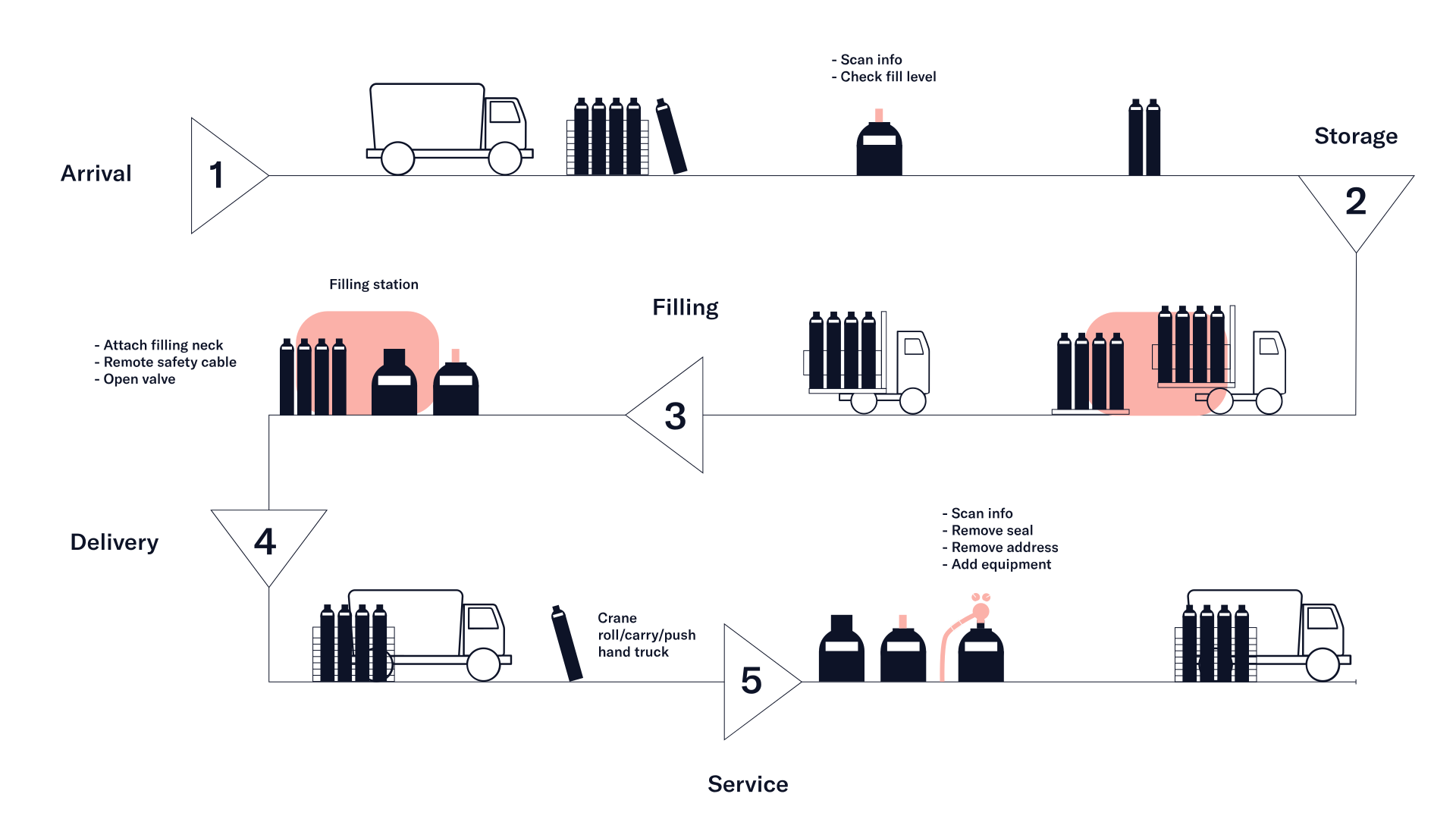
We started by assessing Linde's entire circular value chain, from arrival and storage through filling, delivery and service. It surfaced economic, ecological and occupational-safety potential across the whole cycle, and all of it converged on a single point: the cylinder and its valve. If the gas can't carry Linde's brand values, the valve has to.
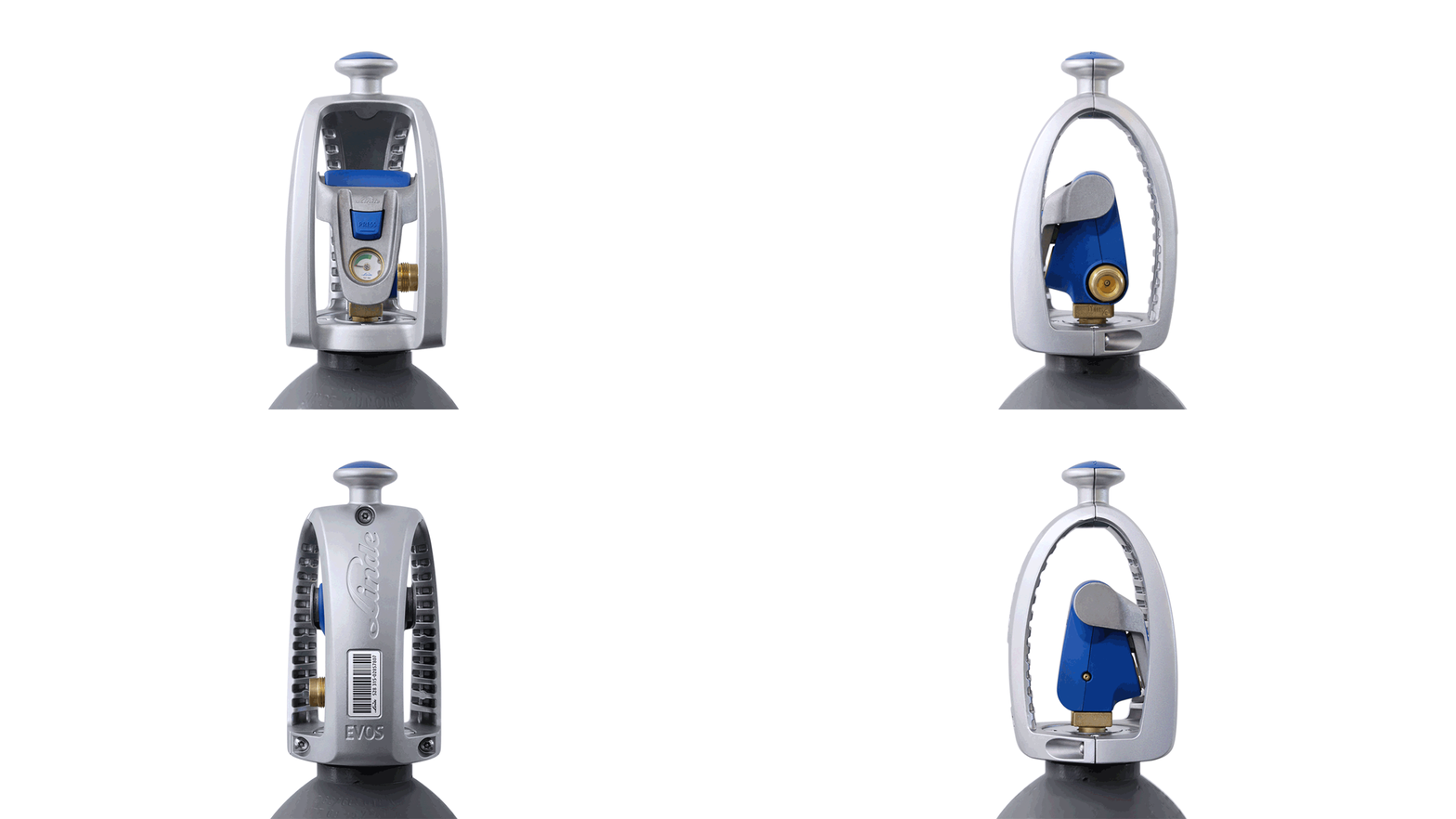
We took responsibility for the full concept, industrial design, engineering, ergonomics and user interface of the valve and guard. Changing how a valve closure fundamentally works, for gases that are sometimes critical or toxic, meant deep technical work within hard performance and regulatory limits, down to the valve seat and the special materials needed to seal it reliably. Because the guard is safety-critical, we ran multiple virtual drop tests on the protective cage well before any physical prototype existed. When the series product was later drop-tested, the results matched the simulations.
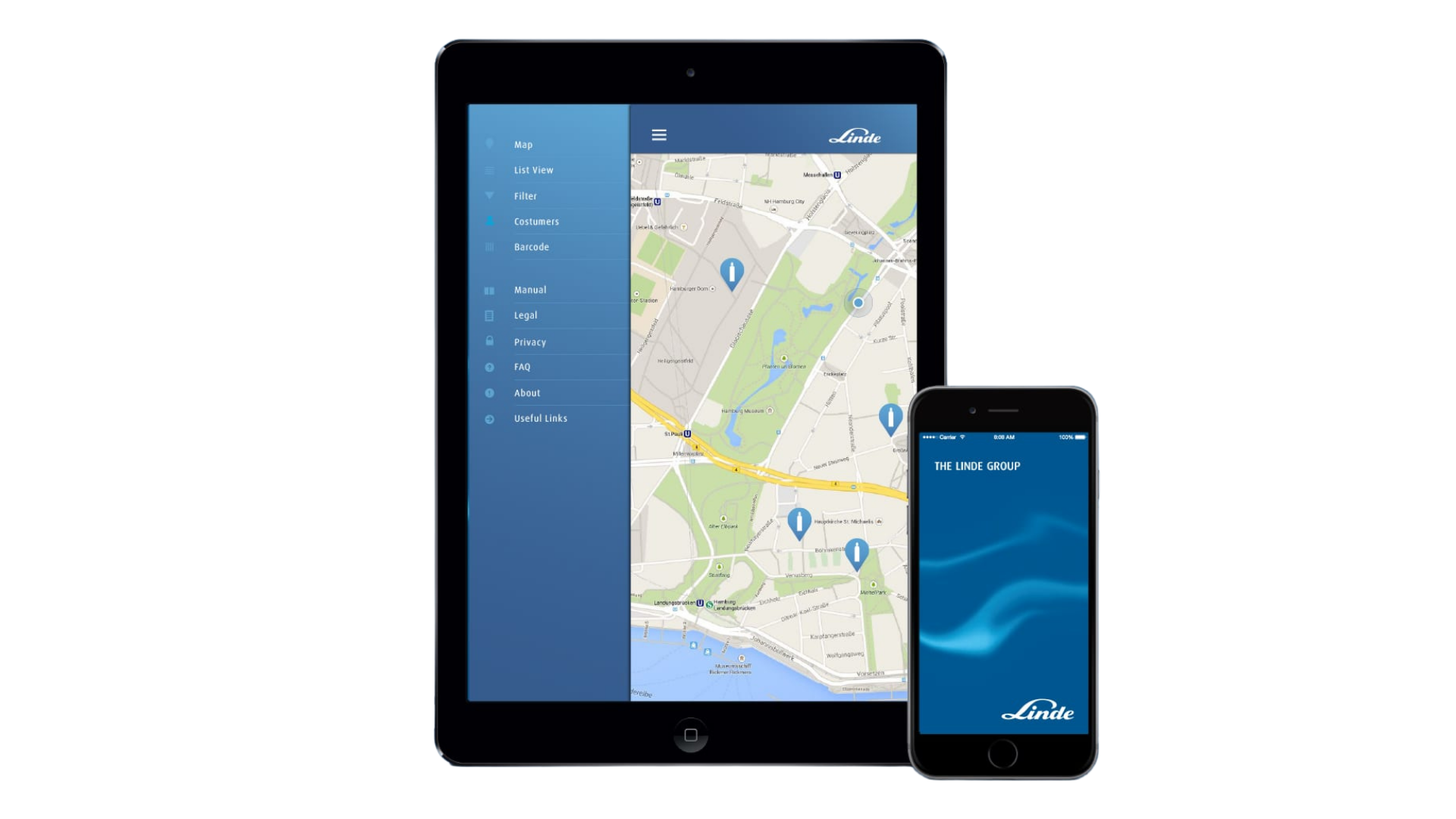
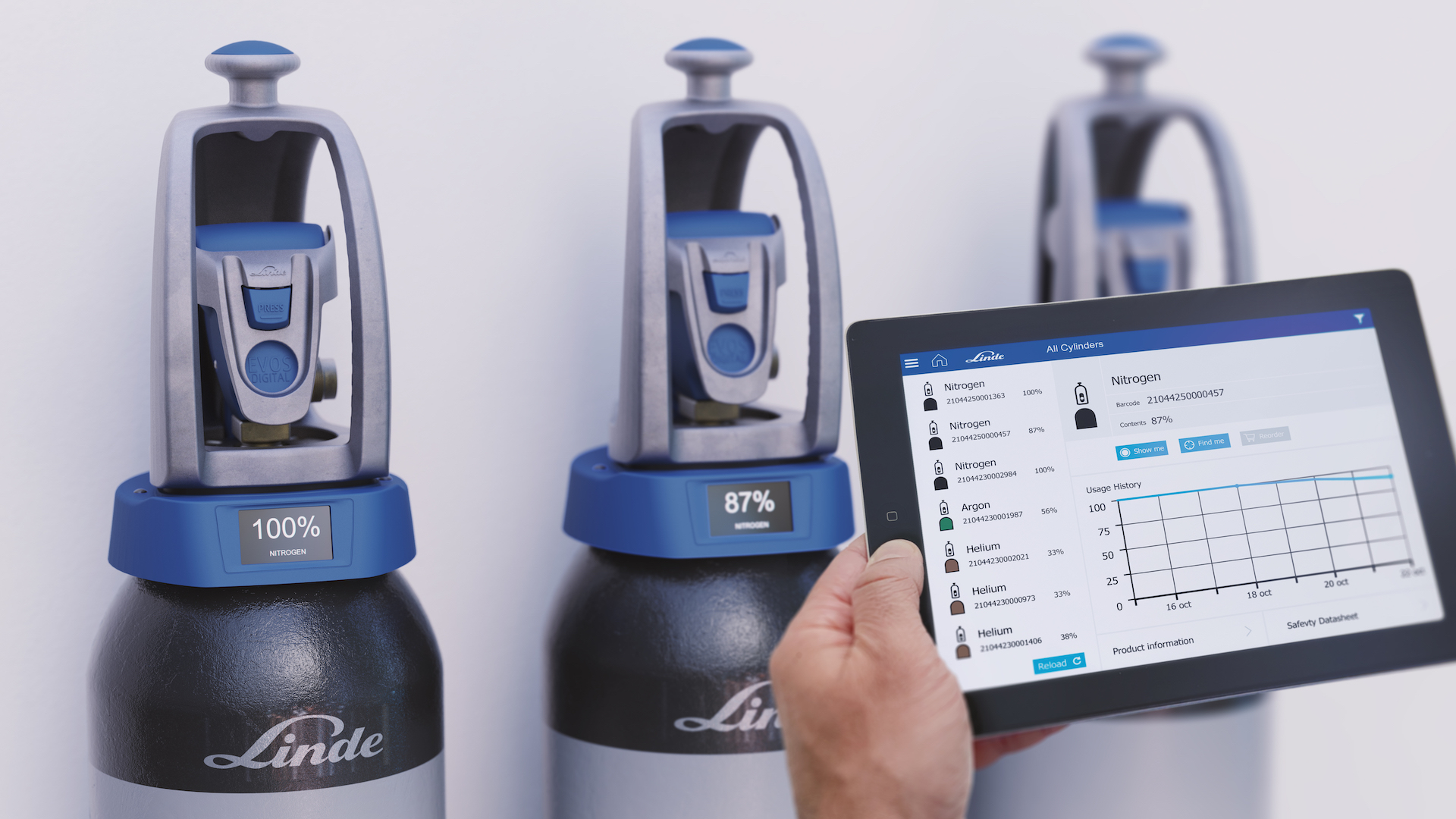
Building on the EVOS Ci platform, we then added pressure sensors and an integrated regulator unit, digitised the data and connected it to the cloud, with a tablet and mobile app for map view, barcode tracking and filterable lists. The connected layer went from first concepts to advanced field trials in 15 months.
None of this could be designed in isolation. Technology, mechanics, customer and user needs, manufacturing, application and safety fed into the design in parallel from day one. We led concept, industrial design, ergonomics and UI, working with an international team spanning product management, legal, procurement and manufacturing partners in forging, moulding and assembly automation. Design and technical realisation were developed together, which made the concept feasible at market scale.
Impact & Results
Safety and quality you can see.
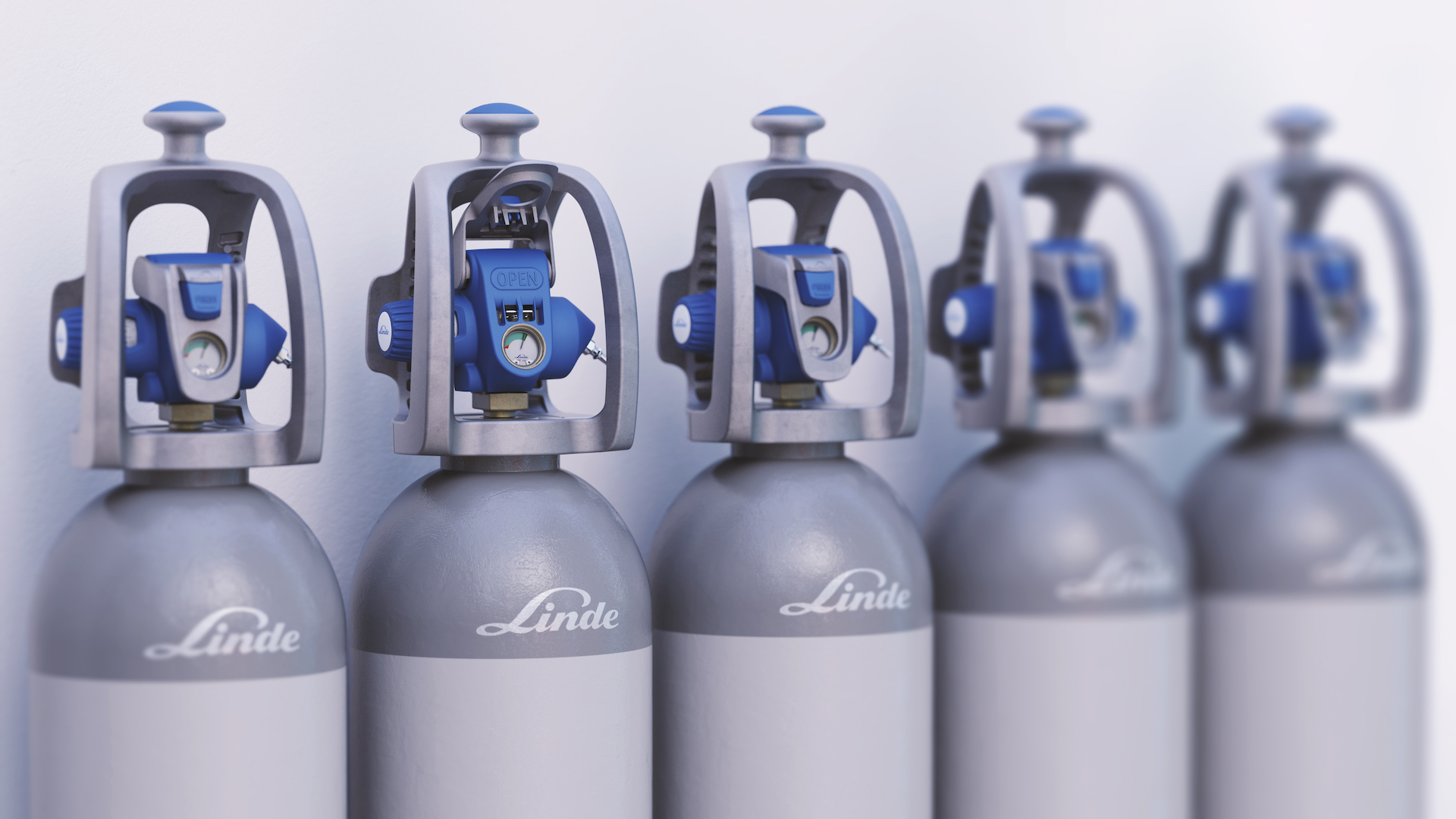
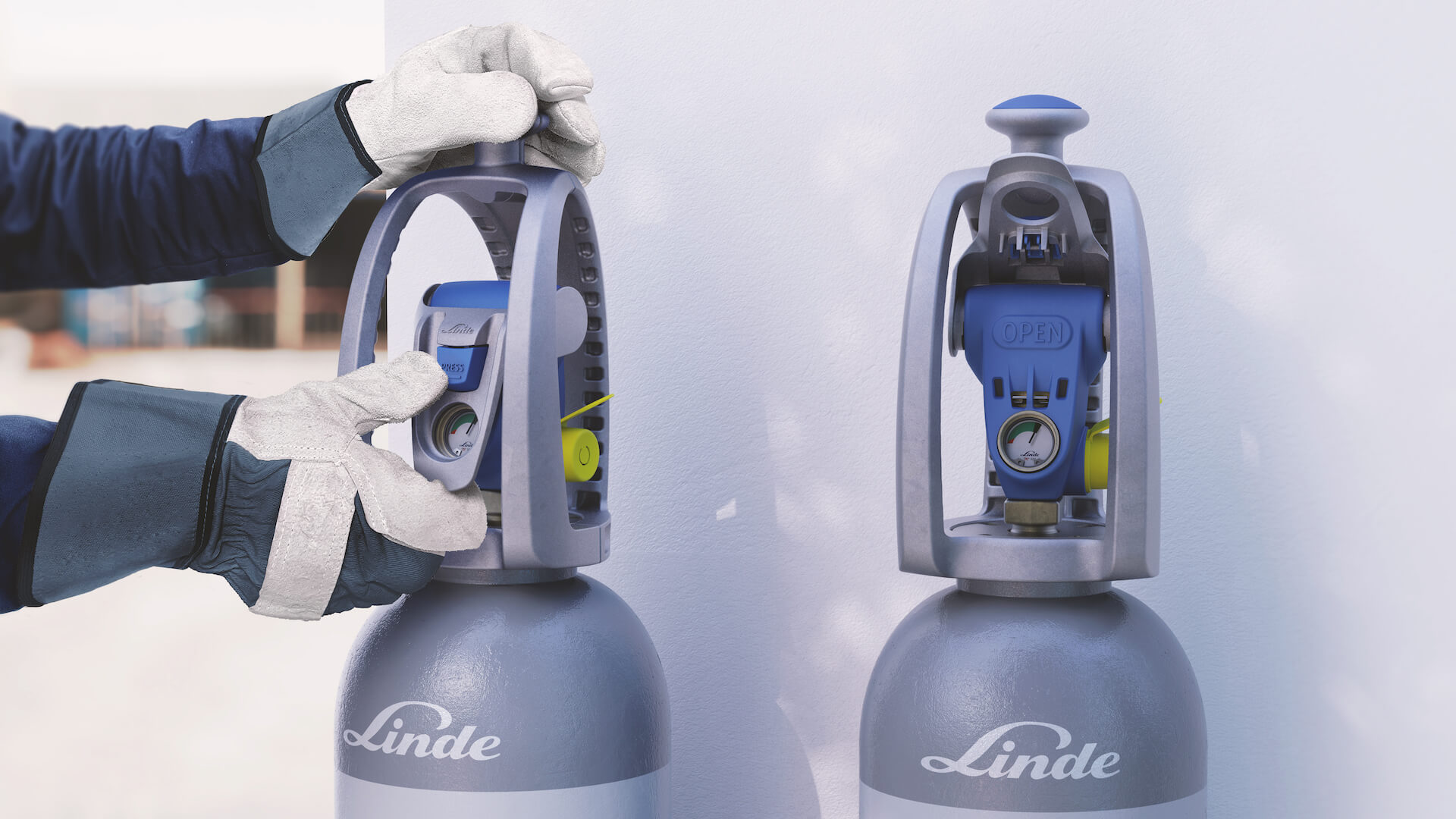
The valve is where an intangible product becomes tangible. EVOS Ci, a completely new single-lever valve with an integrated protective guard, opens and closes with one hand and tells anyone nearby, at a glance, whether it's open or closed. Linde Gas described it as the first time the safety and quality of an intangible product could be experienced, physically and visually. Designed for 300 bar working pressure, EVOS cylinders hold on average 33% more gas than comparable 200-bar cylinders, and more than a dozen patents were filed to protect the design and technology built into the valve and guard.
EVOS DCi, the connected evolution, sends cylinder position, gas type, volume, flow and temperature to the cloud and makes it available on any device. Manual inventory checks become remote fleet visibility; track-and-trace and predictive maintenance become possible; and Linde gained the foundation for a management system that shows where specific gases and cylinders are anywhere in the world. Optimised logistics reduce transport and emissions, and a modular, repairable design extends the service life of cylinders and valves.
Before & After
| Before | After |
| Standard analogue valve; no visible open/closed status or remaining gas from a distance | Single-lever valve whose form shows its status instantly; one-handed operation; built-in safety lock |
| No live data on gas type, volume, flow or temperature | Live cylinder and gas data in the cloud, on any device |
| Manual, personnel-intensive inventory checks; risk of stoppages | Remote inventory visibility, track-and-trace compliance, predictive maintenance |
| Gas as an interchangeable commodity | Gas made tangible and differentiable through a safer, smarter application experience |
| Guard safety proven late, through physical prototypes | Guard safety proven early, through simulation, and confirmed later in the real world |
More success stories
VION

CEO Project | European Union
